Best AeroPress Filters and Accessories
The AeroPress is one of the few brewers where accessories genuinely change what comes out of it, because the filter and the cap are the only parts standing between the coffee and the cup. Swap the paper disc for metal and you get oils and body the paper was removing. Swap the cap for one that holds pressure and you can steep for three minutes upright without losing water, which retires the inverted method and its one real risk. We compared them on what each one measurably changes about the cup, whether it fits the standard or XL chamber, how much cleaning each adds, and — for the metal filters — whether the stated micron rating matches what owners report in sediment.
As an Amazon Associate, Cafe & Crema earns from qualifying purchases. This never affects the price you pay. How we make money.
#1 · Our PickBuy first
AeroPress White Paper Micro-Filters, 350 Count, Compostable Chlorine-Free Paper Filters for Standard Size AeroPress Coffee Makers
Best for: Every AeroPress owner, as the default filter and the thing to keep a spare box of
What we like
- The baseline the whole brewer was designed around, and the reason AeroPress coffee is clean rather than silty
- 350 filters is roughly a year of daily brewing, so restocking is an annual afterthought
- Chlorine-free and compostable — the used puck and filter go into food waste together
- Costs a fraction of any metal filter and never needs cleaning
- Thin enough to rinse and warm the cap in the same motion
What we don't
- A consumable, so there is always a day you discover the box is empty
- Removes oils along with fines, which some drinkers specifically want to keep
- Standard size only — will not fit an XL chamber, which takes its own larger filters
- Single-use, so the sustainability case is weaker than a metal filter's despite being compostable
- Easy to double up by accident when they stick together, which slows the press noticeably
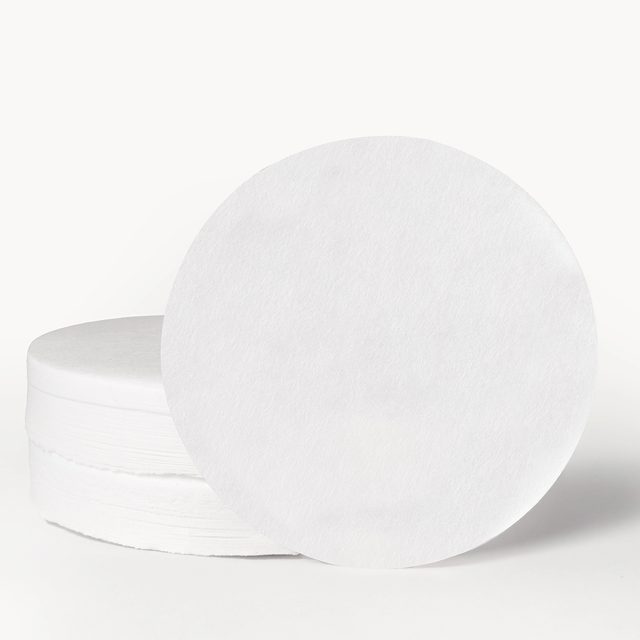
It feels odd to rank a consumable first, but this is the accessory that decides whether you can use the brewer tomorrow, and the large box removes the problem for about a year. Paper is also what makes AeroPress coffee taste the way it does: the disc catches the oils and the fine particles that a metal mesh passes, which is why the cup is clean and bright rather than heavy and textured like a French press.
The practical notes are small. Rinse the filter in the cap before brewing — it removes any faint paper character and pre-warms the cap and chamber at the same time, which matters more than it sounds in a room-temperature plastic body. Watch for two filters sticking together, which happens with a fresh box and produces a press that suddenly feels like hard work.
The only real decision is size. Standard filters do not fit an XL chamber and XL filters do not fit a standard one, so an XL household maintains a separate supply. Worth checking the packet rather than assuming, because the products look nearly identical in a listing.
Not an upgrade, just the correct answer. Buy the large count, keep it in the cupboard, and treat everything else on this page as optional.
Check price on Amazon →#2Best upgrade
AeroPress Flow Control Filter Cap, Fits Standard Size AeroPress, Prevents Drip-Through for Control Over Grind Size and Brew Time
Best for: Anyone who steeps for two minutes or more, and anyone who has been inverting and would rather not
What we like
- Holds liquid in the chamber during the steep, so long brews stop losing water through the filter
- Makes the inverted method unnecessary, removing the only genuinely risky part of AeroPress brewing
- Takes the same paper filters, so it changes the mechanics without changing the cup's character
- Adjustable restriction rather than a fixed valve, which gives some control over press resistance
- Official part, so it fits the seal and thread properly and is stocked as a spare
What we don't
- More parts to rinse than a plain cap, and the valve seat traps coffee oil if it is only rinsed
- The adjustment is coarse — useful, but not the fine control the name suggests
- Standard size only; the XL takes a different version
- Does not, on its own, make espresso or anything close to it
- Adds a step to assembly that is easy to get wrong when half awake
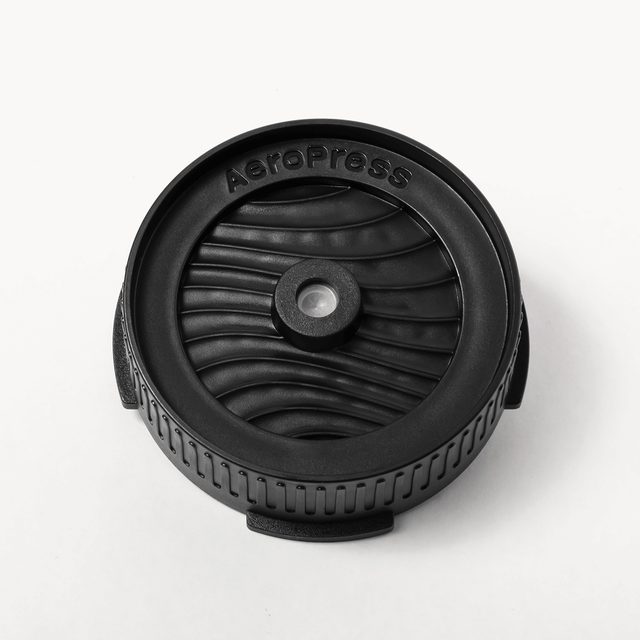
The problem this solves is structural rather than a matter of taste. In a standard AeroPress the filter sits at the bottom and gravity works throughout the brew, so a portion of the water you measured drains into the mug before the steep has finished. On a short brew that is negligible. On a two-and-a-half-minute steep it means you are no longer immersing the coffee in the water you weighed.
The usual fix is to invert the brewer, and the usual cost is flipping a chamber of near-boiling coffee held in by a screw cap. This cap removes both. Liquid stays put until you press hard enough to open the restriction, so long and coarse recipes work upright, and nothing needs turning over.
What it is not is a route to espresso. It raises resistance and slows the flow; it does not generate anything close to the nine bar a shot requires. Treat it as the part that makes long immersion practical and safe, and the description matches what it does. The one maintenance note: take it apart to clean rather than rinsing it, because the valve seat is exactly the kind of recess coffee oil collects in.
The single accessory that changes how you brew rather than what you brew. If you invert every morning, this replaces the habit.
Check price on Amazon →#3Most concentrated
Fellow Prismo AeroPress Filter Cap for Espresso-Style Coffee and Cold Brew, No-Drip Seal, Pressure Actuated Valve, Reusable Stainless Steel Mesh
Best for: Drinkers who want the most concentrated cup an AeroPress can make, or a milk-drink base
What we like
- Sprung pressure-actuated valve seals completely, so full immersion is genuinely full
- Includes a 150-micron etched steel mesh, so it works without paper at all
- Builds noticeably more resistance than the official cap, producing a thicker, more concentrated cup
- No inversion needed, and the seal is more absolute than an adjustable restriction
- Doubles as a clean way to make small-batch cold brew in the chamber
What we don't
- The etched mesh passes oils and some fines, so the cup is heavier and less clean than paper
- More expensive than the official cap and made by a third party, so fit tolerances vary between AeroPress generations
- The valve requires real pressure to open, which is harder work and less pleasant on a long press
- Fine mesh needs proper cleaning or it blinds and the press becomes very hard
- Marketed around espresso-style results, which overstates what any hand-pressed brewer produces
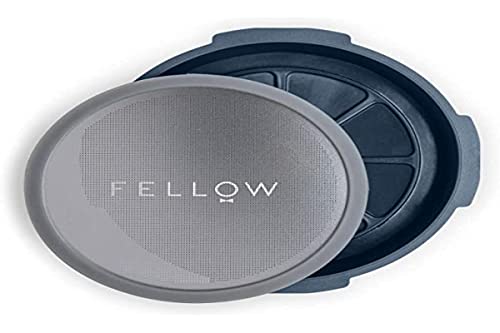
The Prismo and the official flow-control cap solve the same problem and arrive at different drinks, which is the comparison worth making rather than picking a winner. Both stop drip-through and both remove the need to invert. The Prismo does it with a sprung valve that seals absolutely and opens only under real pressure, and it ships with an etched steel mesh rather than expecting paper.
Those two choices push the cup in the same direction. Higher resistance means a slower, more forceful press and a more concentrated result; a metal mesh means the oils and some fine particles reach the cup. The output is heavier, fuller and less transparent than the same coffee through paper — closer to a very strong filter coffee, and a better base for milk. It is not espresso, and the naming around this category consistently oversells that.
The practical costs are cleaning and fit. A 150-micron etched mesh blinds if it is rinsed rather than scrubbed, and a blinded mesh turns the press into a genuine struggle. Fit against different AeroPress generations is also reported inconsistently, which is the usual risk with a third-party part on a twenty-year-old product line. You can also fit a paper filter above the mesh, which recovers most of the clarity while keeping the sealed valve.
The stronger, heavier alternative to the official cap. Better for concentrate, worse for clarity, and more work to clean.
Check price on Amazon →#4
Able DISK Stainless Steel Coffee Filter, AeroPress Compatible, 152-Micron Fine, Pack of 1
Best for: Drinkers who find paper-filtered AeroPress coffee too thin and want body without switching to a French press
What we like
- The metal AeroPress filter the category is measured against, in production for over a decade
- 152-micron fine etching is tight enough to keep sediment low while still passing oils
- Made in the USA and effectively permanent — no consumable stream at all
- Drops into the standard cap with no other change, so it is a reversible experiment
- Body and mouthfeel increase noticeably compared with paper, which is the whole point
What we don't
- Passes more fines than paper, so the cup is less clean — a change in character, not an upgrade
- Needs scrubbing rather than rinsing, and blinds with coffee oil if neglected
- Thin etched disc is easy to lose down a sink or bend if handled carelessly
- Standard size only, with a separate XL version
- The finer etching flows more slowly than coarser metal discs, so the press needs more patience
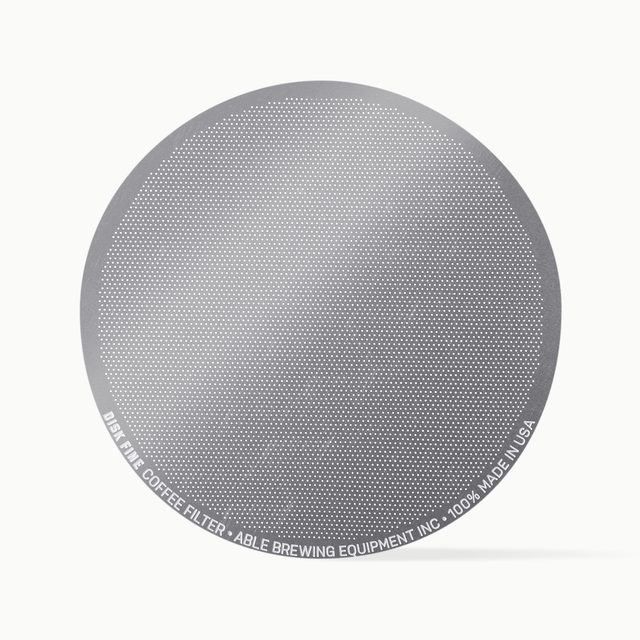
The DISK is the filter most metal-AeroPress conversations are actually about, and the fine 152-micron version is the one worth having. Paper removes oils; metal does not. That single difference is what people are buying — a fuller, rounder, slightly heavier cup that keeps the aromatic oils paper strips out, without the sediment load a French press mesh produces.
Calling it an upgrade is wrong, though. It is a different result, and whether it is better depends on what you want from the brewer. If you chose an AeroPress specifically because it produces clarity that a press cannot, a metal disc moves away from the reason you bought it. If you have always found the cup a little thin, it is exactly the fix.
The cost is maintenance and it is not optional. An etched disc traps oil in its perforations, and a neglected one both flows badly and makes the coffee taste stale regardless of how fresh the beans are. Scrub it, do not rinse it, and dry it rather than leaving it wet in the cap. The economics are also worth stating honestly: it pays for itself against paper only over years, so buy it for the cup rather than the savings.
The reference metal filter. Buy it to add body and oils, not to save money, and expect to clean it properly.
Check price on Amazon →#5
AeroPress Gold Tone Stainless Steel Reusable Filter, Durable Metal Coffee Filter for Standard Size AeroPress Manual Coffee Makers
Best for: Owners who want a permanent filter but find the DISK's cup too heavy
What we like
- 316-grade stainless steel, a more corrosion-resistant alloy than most metal filters use
- Etched finely enough that the cup is noticeably cleaner than a typical metal disc
- Official part, so cap fit and thickness are correct by design
- Gold-tone finish makes it easy to spot in a drawer or sink, which sounds trivial and prevents losses
- Reusable indefinitely with no consumable stream
What we don't
- Still passes more sediment and oil than paper, so it does not replace paper for clarity
- The newest product here, so long-term owner reports on the finish and etching are thin
- Standard size only, with a separate XL version
- Same cleaning discipline as any metal filter — scrub, do not rinse
- Sits between paper and the DISK in character, which makes it the hardest of the three to have a strong reason to buy
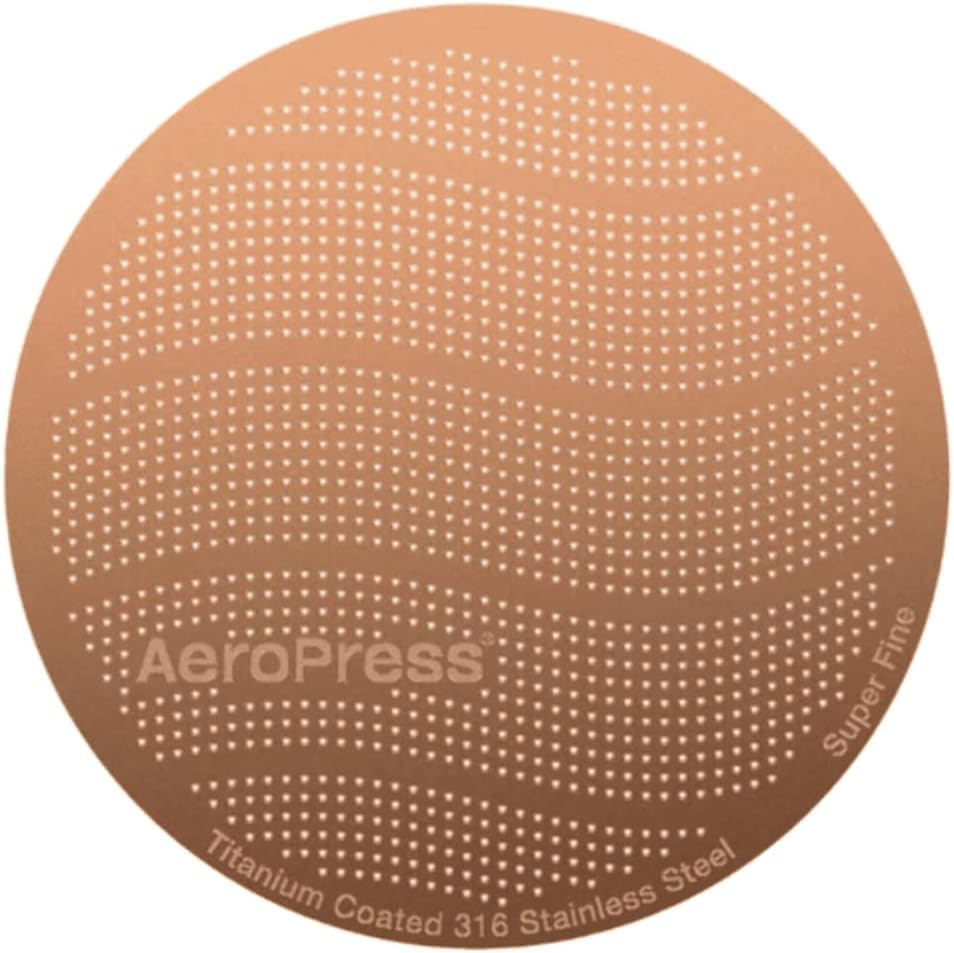
The Gold Tone is AeroPress's own answer to the metal-filter market, and its position is deliberately between the two established options. Etched finer than a typical reusable disc, so the cup carries less sediment than the DISK produces, while still passing the oils that paper removes. 316 stainless is a genuinely better alloy choice than the 304 most kitchen filters use, and it should resist pitting and staining longer.
Being an official part has practical value beyond branding: thickness and diameter are matched to the cap, so it seats without the fit uncertainty third-party discs sometimes bring, and the XL version exists for the larger chamber.
The honest weakness is positioning rather than quality. Paper gives maximum clarity, the DISK gives maximum body, and this sits between them — which makes it a good filter without a sharp reason to choose it over either. If you already know you want oils in the cup, the DISK commits harder. If you want clarity, paper does it better and costs almost nothing. Buy this if you want a permanent filter and found the DISK too heavy, which is a real and reasonably common position.
The middle option, and a good one. Cleaner than most metal filters, less distinctive than either paper or the DISK.
Check price on Amazon →The one thing you have to buy
Everything on this page is optional except the paper filters, and the only real decision there is how many at once. A large box is roughly a year of daily brewing and removes the restocking problem entirely.
Two small habits are worth forming. Rinse the filter in the cap before you brew — it removes any faint paper taste and pre-warms the cap and chamber, which matters in a room-temperature plastic body holding a small volume of water. And separate the discs before loading, because two stuck together produce a press that suddenly feels like a fight.
Then check the size. Standard and XL filters are different products that look nearly identical in a listing, and the caps are not interchangeable either.
Drip-through is what the caps are for
This is the mechanical problem worth understanding, because it explains why two of the five products here exist.
The filter sits at the bottom of the chamber, so gravity is pulling water through it from the moment you pour. Over 45 seconds that loss is trivial. Over two and a half minutes it is enough that you are no longer steeping the coffee in the water you weighed — some of it left early, under-extracted, and is already in the mug.
The classic workaround is the inverted method: assemble the brewer upside down so nothing can drain, then flip it onto the mug to press. It works, and it is the only part of AeroPress brewing that can genuinely go wrong, since you are turning over a chamber of near-boiling coffee held in place by a screw cap.
A valve or flow-control cap makes the safe method and the controlled method the same method. Nothing drains, nothing gets flipped, and long or coarse recipes behave properly. If you have been inverting out of habit, this is the accessory that ends it — and the pillar guide covers when a long steep is worth wanting in the first place.
Prismo or the official cap
They solve the same problem and produce different coffee, so this is a choice rather than a ranking.
The official Flow Control Filter Cap holds liquid behind an adjustable restriction and uses ordinary paper filters. It changes the mechanics and leaves the character of the cup alone — clean, bright, recognisably AeroPress, just with a properly timed immersion. It is the cheaper of the two and, being an official part, fits without question.
The Prismo uses a sprung valve that seals completely and opens only under real pressure, and it ships with a steel mesh instead of expecting paper. Higher resistance plus a metal filter pushes the result somewhere else: thicker, more concentrated, more oil in the cup, a better base for milk. It is also harder work to press and needs more cleaning.
If you want long steeps without changing your coffee, the official cap. If you want the most concentrated cup an AeroPress can produce, the Prismo. Neither makes espresso.
Metal against paper
The filter choice is the one that changes taste, and it is genuinely a matter of what you want rather than which is better.
Paper removes oils and fines. The cup is clean, bright and transparent, and light roasts show their acidity clearly. This is the character the AeroPress became known for.
Metal passes the oils. The cup gains body, weight and a rounder mouthfeel, and it carries more visible sediment — nowhere near a French press, but no longer clean. Aromatic oils that paper strips out stay in.
Within metal there is a further split. The Able DISK in its fine etching commits hardest to body. The official Gold Tone is etched finer and lands closer to paper. If you know you want oils, the DISK is the clearer choice; if you are curious rather than committed, the Gold Tone is the gentler step.
The trap is the same for both: an etched disc clogged with coffee oil flows badly and makes fresh beans taste stale. Scrub, do not rinse.
What to skip
Scoops and stirrers go unused within a month, because a scale is more accurate than any scoop and any spoon stirs as well as the supplied paddle.
Organiser stands and travel caddies are storage. They are worth buying if counter clutter bothers you and worth nothing otherwise, and neither touches the coffee.
Third-party caps and filters from unbranded sellers are the one category to be careful with. This is a twenty-year-old product line with several chamber generations, and fit tolerances on cheap copies are reported inconsistently — a cap that does not seal properly against the chamber turns a brew into a spill.
Which to buy
Everyone — a large box of paper filters, in the size that matches your chamber.
If you steep long, or you invert — the official Flow Control Filter Cap.
If you want the strongest cup the brewer can make — the Prismo, and accept the cleaning.
If the cup tastes thin — the Able DISK Fine.
If you want a permanent filter but not a heavy cup — the official Gold Tone.
And the accessory that beats all of them is not on this page. An even grind changes AeroPress coffee more than any filter or cap, which is why burr grinders come first and why a modest hand grinder is enough for a single cup at a time. A blade grinder undoes everything here simultaneously — the dust it produces over-extracts into bitterness and blinds whichever filter you just fitted.
Which model you fit these to barely matters, since the standard-size chamber is shared across the range: which AeroPress to buy is a question about capacity and portability rather than coffee.
For how to use any of it, see AeroPress brewing: standard, inverted and bypass explained.
Frequently asked questions
Do I need a metal filter for my AeroPress?
No, and it is not an upgrade so much as a different cup. Paper removes the coffee's oils and fine particles, which is precisely why AeroPress coffee tastes clean and bright rather than heavy. A metal filter leaves the oils in, producing a fuller, rounder, slightly more textured result with more visible sediment. If you chose an AeroPress for its clarity, metal moves away from that. If you have always found the cup a little thin, metal is the fix. Buy one for the character, not to save money — the break-even against a large box of paper filters takes years.
What is the difference between the Fellow Prismo and the AeroPress Flow Control Filter Cap?
Both stop liquid draining through during the steep and both remove any need to invert, but they get there differently and produce different drinks. The official cap uses an adjustable restriction and takes ordinary paper filters, so it changes the mechanics while leaving the cup's character alone. The Prismo uses a sprung valve that seals absolutely and ships with a steel mesh, so it builds more resistance and produces a heavier, more concentrated cup. Choose the official cap for long steeps with a normal AeroPress character, the Prismo for concentrate and milk drinks.
Does a pressure cap let the AeroPress make real espresso?
No. Espresso is defined at around nine bar of pressure and a hand-pressed AeroPress produces well under one, with or without a valve cap. What these caps do is raise resistance and hold back the flow, which produces a thicker, more concentrated coffee that behaves a little like espresso in a milk drink. There is no genuine crema and none of the extraction a shot depends on. The marketing in this category consistently oversells it.
How do I clean a metal AeroPress filter properly?
Scrub it, do not rinse it, and dry it rather than leaving it in the cap. Etched perforations trap coffee oil, and a blinded filter both flows very slowly — turning the press into hard work — and makes fresh coffee taste stale and bitter no matter what beans you use. A soft brush and washing-up liquid after each use is enough; a periodic soak in a coffee-oil cleaner restores one that has been neglected. This is the single most common complaint about metal filters and it is entirely a maintenance issue.
Will standard AeroPress filters and caps fit the XL?
No. The XL has a larger chamber, a larger cap and its own XL-sized paper and metal filters, and none of it is interchangeable with the standard size. Because the products look almost identical in a listing, this is an easy and irritating ordering mistake. If you own both an XL and a standard model you are maintaining two separate consumable supplies.
Can I use a paper filter and a metal filter at the same time?
Yes, and it is a genuinely useful trick rather than a curiosity. Sitting a paper disc on top of a metal filter, or above the Prismo's mesh, recovers most of the clarity paper gives while keeping whatever the metal part was there for — usually the sealed valve. It also makes the metal filter easier to keep clean, since the paper catches most of the oil before it reaches the mesh. The press is slightly slower with both in place.
Are the scoop, stirrer and organiser stand worth buying?
They are storage and convenience rather than brewing, and none of them changes what comes out of the chamber. The bundled scoop is the first thing most owners abandon, because a scale is both more accurate and faster once you are used to it, and any spoon stirs as well as the supplied paddle. An organiser stand is a reasonable purchase if counter clutter genuinely bothers you and a waste of money otherwise.
What actually improves AeroPress coffee the most?
Nothing on this page. In order: fresh coffee, an even grind from a burr grinder, cooler water than most instructions suggest, and a scale so that a good result becomes a repeatable recipe. The accessories here matter after those four, and the caps matter more than the filters because they change what the brewer can do rather than only how the cup tastes. A blade grinder undoes every improvement on this page at once, because the dust it produces both over-extracts and blinds whichever filter you have fitted.