Best Espresso Cups and Latte Mugs
A double espresso is about sixty millilitres of liquid at around seventy degrees, and it is poured into a ceramic object weighing several times as much at room temperature. The cup wins that exchange. This is why the same shot that tasted excellent at a café tastes flat and tepid at home, and it is a problem of thermal mass and shape rather than of coffee — a thin, cold, wide cup drops a shot below the temperature at which its sweetness reads, and a cup with the wrong interior curve makes latte art physically harder than it needs to be. We looked at the cups specialty cafés and home baristas actually use, judged on wall thickness and heat retention, interior shape, how the rim meets the lip, whether the size matches a real drink rather than a marketing one, and how they survive daily dishwashing.
As an Amazon Associate, Cafe & Crema earns from qualifying purchases. This never affects the price you pay. How we make money.
| Rank | Product | Score | Best for | Link |
|---|---|---|---|---|
| #1 | notNeutral LINO Porcelain Espresso Cup & Saucer, 3 oz, White, Set of 2Top pick | 9.4 | Anyone who wants one cup to get espresso right and is buying it once | Check price → |
| #2 | ACME Cappuccino Cup, 190ml / 6.4 oz Porcelain, 6-PackBest for latte art | 9.2 | Anyone learning to pour, or buying a matching set of six at once | Check price → |
| #3 | notNeutral LINO Porcelain Large Latte Cup & Saucer, 12 oz, White, Set of 2Best large mug | 9.2 | Milk drinkers who want a proper latte rather than a cappuccino | Check price → |
| #4 | Bodum Pavina Double Wall Borosilicate Glasses, 8 oz, Set of 2Best double wall | 9.0 | Layered drinks, iced coffee, and anyone who drinks slowly | Check price → |
| #5 | Bormioli Rocco Bodega Mini Glass Tumblers, 7.5 oz, Set of 12Best budget | 9.4 | Cortados, cheap sets, and households that break things | Check price → |
#1 · Our PickTop pick
notNeutral LINO Porcelain Espresso Cup & Saucer, 3 oz, White, Set of 2
Best for: Anyone who wants one cup to get espresso right and is buying it once
What we like
- Thick porcelain wall holds the heat of a small shot far better than a thin cup
- 3 oz is the correct size for a double espresso with headroom, not a thimble
- Interior curve is designed so crema pools rather than spreading thin
- Handle sits flush with the rim, which is more comfortable than it sounds
- The cup used by a large number of specialty cafés, so it is a known quantity
What we don't
- Sold in twos, so a set for guests costs several times the entry price
- Heavy enough that it genuinely needs preheating to be at its best
- White shows espresso staining if left unrinsed
- Design-led pricing rather than commodity pricing
- The saucer is shallow and does not corral a spoon well
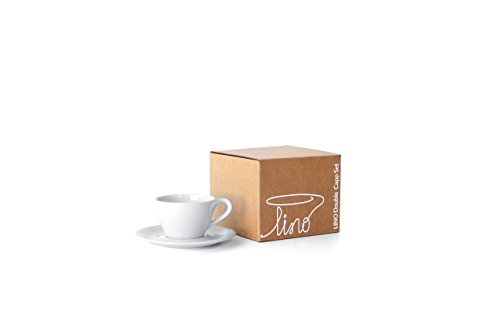
Espresso is the drink most damaged by its container, because the volume is tiny and the surface area relative to that volume is large. A thin cup at room temperature can pull several degrees out of a double shot within seconds of the pour, and those degrees are where the sweetness and the aromatics live. The LINO's answer is mass: the porcelain is noticeably thick, and once it is warm it stays warm for the two or three minutes an espresso is actually alive.
The interior shape is the second half of it. The wall curves rather than dropping straight, so the crema gathers towards the centre and holds together instead of thinning out against a flat base. It looks better and it also tastes different — crema carries aroma, and a shot that keeps it reads sweeter than the same shot that has lost it. That curve is why this cup turns up on so many café counters, and it is not marketing.
The practical notes are simple. Three ounces is right for a double with room to swirl; two-ounce cups overflow with a modern ratio. It is sold in pairs, which makes a set of six an investment rather than a purchase. And it wants preheating — the thermal mass that keeps a shot warm will steal heat from it first if you pour into a cold cup, so leave it on the machine's warming plate or fill it with hot water while the shot pulls.
The reference espresso cup. Thick enough to hold temperature, shaped for crema, and sized to a real double rather than a decorative one.
Check price on Amazon →#2Best for latte art
ACME Cappuccino Cup, 190ml / 6.4 oz Porcelain, 6-Pack
Best for: Anyone learning to pour, or buying a matching set of six at once
What we like
- Wide, shallow bowl gives the largest possible surface for pouring art
- 190ml is the classic flat white and cappuccino size
- Sold as six, so it is the sensible way to buy a matching set
- Rolled rim is comfortable and resists chipping
- Robust enough for daily dishwasher use
What we don't
- Wide and shallow means it loses heat faster than a deeper cup
- No saucer included at this size and price
- Thinner walls than the LINO, so preheating matters more
- The shape that helps latte art also cools a drink quicker
- Colour options vary in availability
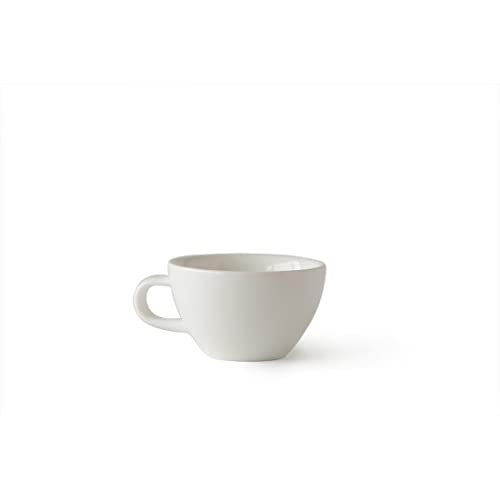
Latte art is mostly a milk problem, but the cup makes it easier or harder in a way that is easy to underestimate. A wide, shallow bowl means the milk arrives on a broad surface with room to spread, so a pattern has space to open before it reaches the rim. A tall, narrow cup forces the same volume through a smaller opening, which pushes the pour deeper and buries the pattern. If you have been pouring into a straight-sided mug and wondering why nothing appears, this is a substantial part of the answer.
At 190ml this is the traditional flat white and cappuccino volume, which is to say the size at which a double shot and steamed milk stay in proportion. Larger cups do not make a better cappuccino; they make a weaker one, because the coffee stays the same and the milk grows.
The trade for that wide bowl is heat. A shallow cup has more exposed surface per millilitre and cools faster than a deep one, and the ACME's walls are not as thick as the LINO's. Preheat, and drink it while it is a cappuccino rather than while it is warm milk. The compensation is the six-pack: matching cups for a household at a price per cup that the set-of-two brands cannot approach.
The best canvas here. Buy it if you are pouring milk drinks and want six matching cups without paying set-of-two prices three times over.
Check price on Amazon →#3Best large mug
notNeutral LINO Porcelain Large Latte Cup & Saucer, 12 oz, White, Set of 2
Best for: Milk drinkers who want a proper latte rather than a cappuccino
What we like
- 12 oz is a genuine latte size without becoming a soup bowl
- Same thick porcelain and interior curve as the espresso cup
- Still wide enough at the rim to pour art into
- Feels substantial rather than fragile in the hand
- Matches the rest of the LINO range if you build a set
What we don't
- Sold in twos, at large-cup prices
- Heavy when full, which not everyone likes
- Takes noticeably longer to preheat than a small cup
- Too large for a cappuccino, which is a different drink
- A 12 oz latte needs a double shot to taste of coffee at all
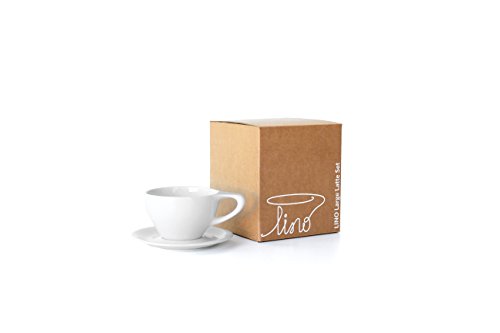
There is a size beyond which a milk drink stops being coffee, and a great many mugs sold as latte cups are past it. Twelve ounces is roughly the practical ceiling: a double shot in 12 oz of milk is still recognisably espresso-forward, and the same shot in 16 oz is not. Buying a cup this size is therefore a decision about the drink, not just about capacity.
What you get here is the LINO construction scaled up — the same thick porcelain, the same curved interior wall, the same flush handle. The curve still matters at this volume: it gives a pour somewhere to go, so a 12 oz latte can carry art in a way a straight-sided mug cannot. It also holds heat well, which counts more in a large drink you will take twenty minutes over than in an espresso you finish in two.
The caveats are weight and preheating. Full, this is a heavy object, and the thermal mass that keeps a latte warm takes a while to charge — rinse it with hot water first or it will take the edge off your milk. And it is emphatically not a cappuccino cup: pour a cappuccino into it and you will have made a weak latte with a thin cap of foam.
The large end of the range done properly — thick, curved and 12 oz rather than the 16 oz that turns a latte into flavoured milk.
Check price on Amazon →#4Best double wall
Bodum Pavina Double Wall Borosilicate Glasses, 8 oz, Set of 2
Best for: Layered drinks, iced coffee, and anyone who drinks slowly
What we like
- Double wall keeps a drink hot far longer than single-wall ceramic
- Outside stays cool enough to hold without a handle
- No condensation, so it works for iced coffee too
- You can see the layers, which is most of the point of a cortado or an espresso tonic
- Borosilicate is dishwasher and microwave safe
What we don't
- No handle, so a very hot drink is briefly awkward
- The inner wall is thin and breaks if knocked against a tap
- Straight-ish sides make latte art harder than a wide bowl
- 8 oz sits between cappuccino and latte rather than matching either exactly
- The air gap means the glass itself never preheats usefully
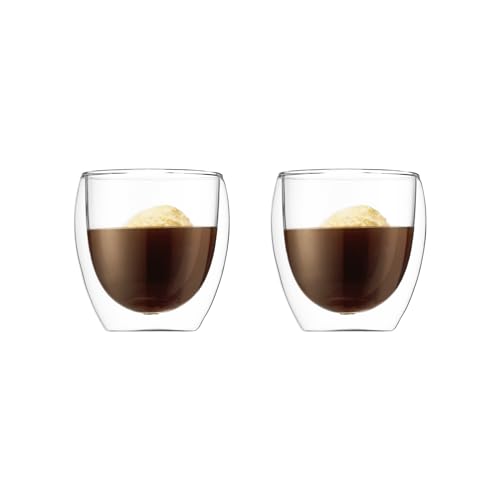
Double-wall glass works on a different principle to everything else here. Instead of storing heat in a thick wall, it traps a layer of air between two thin ones and simply refuses to conduct — which means the drink stays hot for longer than a ceramic cup manages and the outside stays cool enough to hold bare-handed. For anyone who drinks slowly, that is the single largest practical difference in this category.
It also earns its place visually. A cortado, an espresso over tonic, an iced latte with the milk still settling through it — these are drinks where seeing the layers is part of the appeal, and clear glass is the only way to have that. The absence of condensation on the outside makes it work just as well cold as hot.
What it is not is a latte art cup. The sides are more upright than a cappuccino bowl and the surface is smaller, so patterns are harder to land and harder to see against a clear background. The inner wall is also genuinely thin — most Pavina breakages are the same story of a glass tapped against a tap while rinsing. And there is nothing to preheat: the air gap that keeps your coffee hot also stops you charging the glass with heat beforehand, which for once does not matter, because it is not stealing any either.
The best heat retention on this page, by a mechanism no ceramic can match. Buy it for cortados, iced coffee and slow drinking rather than for latte art.
Check price on Amazon →#5Best budget
Bormioli Rocco Bodega Mini Glass Tumblers, 7.5 oz, Set of 12
Best for: Cortados, cheap sets, and households that break things
What we like
- Twelve glasses for the price of a single pair of specialty cups
- Tempered glass, so it survives dishwashers and drops that would end a porcelain cup
- The squat Italian bar shape that cortados are traditionally served in
- Stacks, which matters in a small kitchen
- Doubles for everything from water to dessert, so nothing goes unused
What we don't
- Single-wall glass, so heat retention is the worst here
- No handle and the glass gets hot
- Nothing about it is designed for coffee specifically
- Thin rim feels less pleasant than a rolled porcelain edge
- Twelve glasses is more storage than some kitchens have
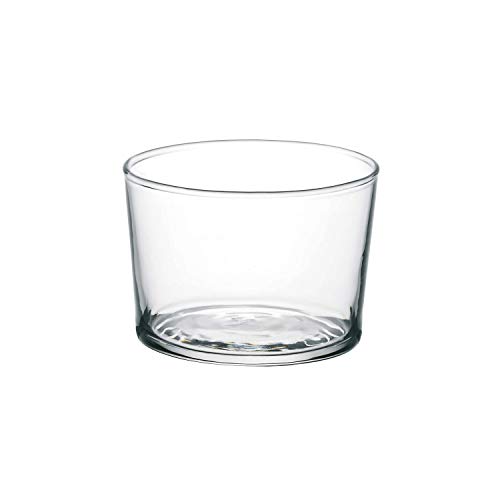
This is the small tumbler that Spanish and Italian bars have used for generations, and it is on this list because the shape is genuinely correct for a cortado — an espresso cut with a roughly equal volume of milk, in a glass, at around 4 to 5 oz filled. That the same glass costs a fraction of anything designed for the purpose is the reason it belongs here rather than an accident.
Tempered glass is the practical argument. It goes in the dishwasher indefinitely, it stacks, it tolerates being knocked about, and when one eventually does break there are eleven more. For a household that is hard on drinkware, or for anyone setting up a kitchen from nothing, twelve of these cost less than one pair of specialty cups and will outlast them.
The honest limitation is heat. Single-wall glass conducts freely: the drink cools quickly and the glass gets hot to hold, which is fine for a cortado you finish in a minute or two and poor for anything larger or slower. There is no interior curve doing anything for crema and no thermal mass doing anything for temperature. What there is, is the right shape at the right size for very little money, which for a great many people is the correct trade.
Not a specialist cup and not pretending to be one. It is the honest budget answer, and the shape happens to be exactly right for a cortado.
Check price on Amazon →Almost every article about espresso cups is really about how they look. This one is about the two things that change the drink: how much heat the cup takes out of it, and what the inside of the cup does to the surface.
Both are measurable, both are ignored by most of what is sold, and one of them is free to fix.
The temperature problem
A double espresso is roughly sixty millilitres. A ceramic cup weighs a hundred and fifty grams or more. When you pour one into the other, heat moves until they meet somewhere in the middle, and the cup — being heavier and colder — decides most of where that middle is.
This is why the same beans, the same machine and the same dialled-in shot can taste sweet at nine in the morning and flat at ten. Nothing about the coffee changed. The cup was cold.
There are two ways out and they work in opposite directions.
Store heat. A thick porcelain cup, preheated, arrives at the pour already warm and then releases that heat slowly back into the drink. This is what café cups are doing, and the thickness that makes them feel expensive is the functional part.
Refuse to conduct. A double-wall glass traps air between two thin layers and simply does not move heat in either direction. Nothing to preheat, nothing being taken, and the outside stays cool enough to hold.
What does not work is a thin, cold, single-wall cup, which is most of what is in most cupboards.
Preheating is the free half of this. Leave the cup on the machine’s warming plate, or fill it with hot water while the shot pulls and tip it out at the last second. It costs nothing and it does more for the drink than the difference between any two cups on this page.
Size is the drink
The espresso does not change. The cup decides how much milk goes in after it, which means the cup decides which drink you have made.
- Espresso — 3 oz. Larger than the shot on purpose, so there is room to swirl.
- Cortado — 4 to 5 oz. Espresso cut with roughly its own volume of milk, traditionally in glass.
- Cappuccino and flat white — 5 to 6 oz. The size most often got wrong.
- Latte — 8 to 12 oz. Past twelve, the coffee stops registering.
A cappuccino poured into a 12 oz mug is not a large cappuccino. It is a weak latte with a thin cap of foam on it. If you drink both, owning two sizes is more useful than owning one big one.
The inside of the cup
Look into a café cappuccino cup and the wall curves inwards towards the base rather than dropping straight down. That curve does two jobs.
For espresso, it gathers the crema towards the centre and holds it together. Crema carries aroma, and a shot that keeps its crema intact reads sweeter than the same shot that has let it thin out and break against a flat base.
For milk, it gives the pour somewhere to go. Milk entering a wide, curved bowl spreads across a broad surface and a pattern has room to open before it hits the rim; milk entering a tall straight-sided mug is driven downwards and the pattern is buried. If you have been pouring into a mug and getting nothing, the cup is a real part of that and not an excuse.
What none of these fix
A cup cannot rescue a bad shot, and none of them will make thin, hot, bubbly milk pour a rosetta. The cup is a multiplier on what you already have — it protects a good drink from the environment and gives a good pour a surface to land on.
It is also, unlike most upgrades, permanent. Cups do not wear out, do not need descaling and do not become obsolete when you change machines.
Which to buy
One excellent espresso cup if you drink espresso and care about it. Thick, 3 oz, preheated. This is the purchase with the largest effect per pound.
A wide 6 oz bowl, bought as six, if you make milk drinks or are learning to pour. Set-of-two pricing makes a matching household set expensive three times over; a six-pack does not.
Double-wall glass if you drink slowly, drink cortados, or drink iced coffee — it holds heat better than anything ceramic here and it never sweats.
Tempered glass tumblers if you want twelve cups for less than the price of two, and are willing to accept that they will cool a drink quickly and are not designed for coffee at all.
None of them, if what you actually need is coffee that survives a commute. Every cup here is designed to sit still on a table with its contents open to the air, which is the opposite of the problem a travel mug or tumbler solves — sealed, insulated, and built to be knocked over.
And whichever you buy, the routine matters more than the object. Preheat it, rinse it out rather than letting espresso stain sit, and keep the rest of the machine in order — the descaling and water routine is what decides whether the coffee going into the cup was worth the cup in the first place.
Frequently asked questions
Does the cup really change how espresso tastes?
Yes, through temperature rather than magic. A double espresso is a very small volume with a large surface area relative to that volume, so it loses heat quickly, and a cold cup accelerates that sharply — a thin room-temperature cup can take several degrees out of a shot in seconds. Those degrees matter because perceived sweetness and aroma both drop as the drink cools. A thick cup that has been preheated keeps the shot in its window for the couple of minutes it is actually good. Shape contributes too: a curved interior keeps crema gathered rather than letting it thin out and break.
What size should an espresso cup be?
Around 3 oz, or roughly 80–90ml. That is deliberately larger than the volume of the drink, because a modern double runs 50–60ml and you want room to swirl it without slopping over the rim. The traditional 2 oz demitasse was sized for a shorter, older-style shot and is genuinely tight at current ratios. Going much beyond 3 oz starts to look odd and lets the shot spread thin, which does the crema no favours.
What size is a cappuccino cup versus a latte cup?
A cappuccino or flat white is 5 to 6 oz — around 150 to 190ml — and a latte is 8 to 12 oz. The distinction matters because the espresso stays the same in all of them, so size is what sets the coffee-to-milk ratio and therefore the drink. Pouring a cappuccino into a 12 oz mug does not give you a large cappuccino, it gives you a weak latte with a thin cap of foam. If you drink both, two sizes of cup is a more useful purchase than one large one.
Do I need to preheat the cup?
For espresso, yes, and it is the highest-value free thing in this whole category. A thick porcelain cup weighs several times what the shot does, and heat moves from the coffee into the cup until they equalise — so a cold cup takes its share out of your drink before you get to it. Leave the cup on the machine's warming plate, or fill it with hot water while the shot pulls and tip it out just before pouring. Double-wall glass is the exception: the air gap means it neither stores nor steals heat.
Does the cup shape affect latte art?
Considerably. A wide, shallow bowl with a curved interior gives the milk a broad surface to spread across and room for a pattern to open before it reaches the rim, which is why café cappuccino cups are shaped the way they are. A tall, narrow, straight-sided mug forces the pour deeper into the drink and buries the pattern. It will not make a good pour out of bad milk, but the same milk poured into two different cups produces visibly different results, and a wide bowl is much easier to learn on.
Ceramic, porcelain or glass?
Porcelain is the default for hot drinks: dense, thick, holds heat well and does not retain flavour. Stoneware and other ceramics behave similarly but vary more in wall thickness, which is the thing that matters. Single-wall glass conducts heat fast, so drinks cool quickly and the glass is hot to hold — fine for a cortado, poor for anything slow. Double-wall glass is the best insulator of the three and lets you see the drink, at the cost of a fragile inner wall and a shape that is less friendly to latte art.
Are double-wall glasses worth it?
For heat retention they are the best thing here, and by a clear margin — the trapped air layer simply does not conduct, so a drink stays hot far longer than in ceramic and the outside stays cool enough to hold without a handle. They also suit layered drinks and iced coffee, and never sweat. The trade is fragility: the inner wall is thin, and most breakages happen against a tap while rinsing. They are also a poor canvas for latte art. Buy them for cortados, espresso tonics and slow drinking rather than as a general-purpose cup.
Can I put good cups in the dishwasher?
Almost all of them, yes — quality porcelain, borosilicate and tempered glass are all designed for it. The things that suffer are decorated or gilded rims, hand-finished glazes and anything with a printed logo, which fade over a few hundred cycles. The more common real-world damage is mechanical rather than chemical: cups knocking against each other or against cutlery on a crowded rack. Espresso staining in a white cup is worth a rinse rather than a scrub, and a soak in a little cleaning powder lifts it.
How many should I buy?
More than you think, because specialty cups are usually sold in twos and matching a set later is often impossible once a colour is discontinued. If you are furnishing a household, work out how many people drink coffee at once and buy that number now. A reasonable compromise for most kitchens is one excellent, thick espresso cup for the person who cares, a six-pack of a wide cappuccino cup for milk drinks, and a stack of tempered glass tumblers for everyone else and for cortados.